Your developer missed the deadline again. The feature is half-done, the team is pointing fingers, and you're quietly calculating what each extra week is costing you. Before you fire anyone — read this.
The Real Diagnosis
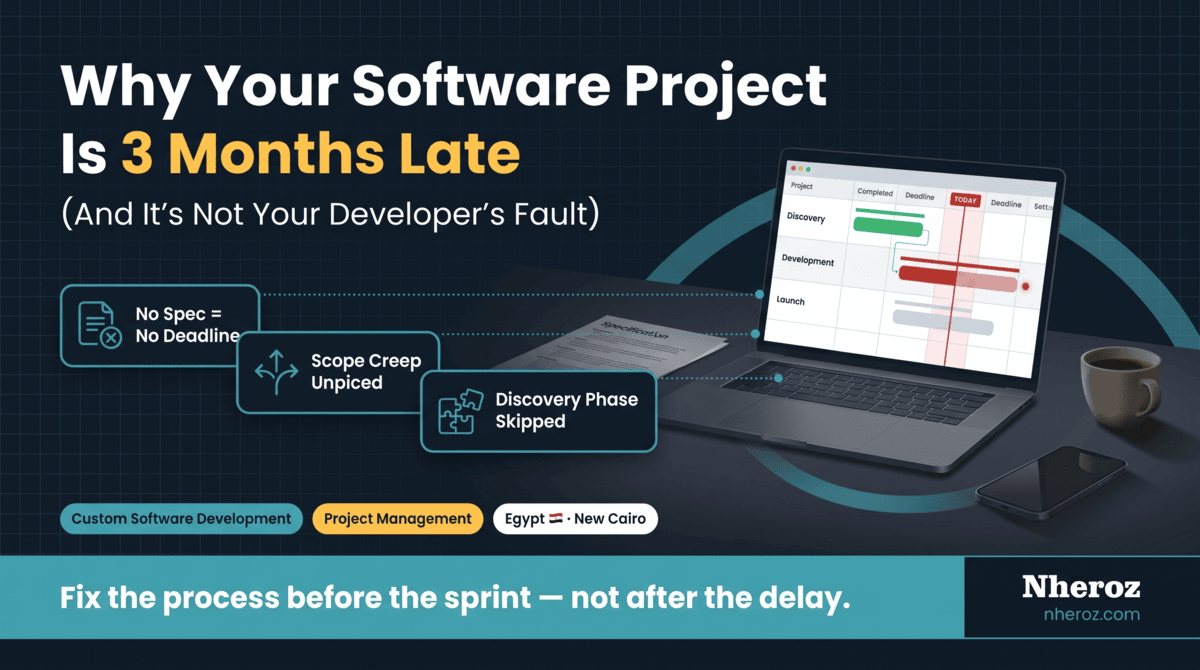
I've worked in software long enough to know that delayed projects rarely come down to a lazy or incompetent developer. The root cause is almost always upstream — in the process, the brief, or the planning phase that never actually happened.
Here are the three patterns I see repeat themselves constantly.
Reason 1: The brief was a wish list, not a specification. There's a significant difference between "I want a platform where users can manage their orders" and a functional spec that defines user roles, edge cases, and acceptance criteria for every flow. Without the latter, your developer builds what they imagine. You expected something different. Both of you are technically right. Nobody aligned upfront.
Reason 2: Scope creep was never priced. Somewhere in the middle of your project, "can we just add..." became the most expensive phrase in the company. Each small addition felt minor in isolation. Collectively, they consumed weeks of work with no formal change log, no revised timeline, and no updated budget. The developer feels used. The client feels robbed. Both feelings are valid.
Reason 3: There was no discovery phase. The project launched directly into design mockups — or worse, straight into code — before anyone deeply understood the actual workflow, the real users, or the technical constraints involved. Asking a developer to build your software before mapping your process is like asking a contractor to build your house before the architect draws the floor plan.
What a Discovery Phase Actually Looks Like
I'm not going to sell you anything in this section. I just want to describe what proper discovery looks like, because most people have never seen it done well.
Stakeholder interviews. Who will use this system day to day? What problem does each user type actually have — not the problem you assume they have? What does success look like from their perspective specifically? These conversations surface requirements that no brief document ever captures.
Workflow mapping. Document the current process before you propose a digital solution. Even if that process lives in spreadsheets and WhatsApp voice notes. You cannot digitize what you haven't mapped. This step alone eliminates an enormous amount of mid-project surprise.
Technical constraint audit. What existing systems need to integrate? What data already exists and in what format? Are you building for 100 users or 10,000? The architecture decisions you make in week one are extremely expensive to reverse in week twelve.
Definition of Done. For every feature, write the acceptance criteria before the sprint begins. If you cannot describe what "done" looks like in concrete terms, you will never agree on whether you've arrived.
This phase typically takes one to two weeks. Most companies skip it to save time. They pay for it with three months of delays and a rebuild that nobody budgeted for.
How This Played Out with VatrinaView
VatrinaView is a live SaaS platform we built here at Nheroz — currently running with 50+ paying customers. Before writing a single line of code, we spent real time understanding how small Egyptian traders actually sell things.
The reality: most of them operate WhatsApp-first. They use InstaPay because it works for buyers who don't have bank cards. They distrust complex dashboards. They often manage multiple stores under one business.
That understanding shaped every architecture decision. The three-tier image compression system — optimized for slower mobile connections. InstaPay integration as the primary payment method, not an afterthought. Account-based multi-tenancy that lets one owner manage unlimited stores without creating separate accounts.
We didn't save time by skipping discovery. We saved months of rebuilds by doing it right at the start. The platform launched with customers who actually used it — because it was built for how they work, not for a generic "e-commerce user" that doesn't exist in our market.
Before Your Next Project Kicks Off — Answer These
- Can you describe the primary user and their exact daily workflow in three sentences?
- Is there a written list of features with acceptance criteria defined for each one?
- Do you have a change control process — a formal way to add scope that includes a revised timeline and cost?
- Has your development partner mapped your current process before proposing a technical solution?
- Is there a weekly check-in structure where progress is measured against the spec — not against gut feel?
If you answered "no" or "I'm not sure" to any of these, that's not a warning sign. It's a map showing you exactly where your project will break.
Where to Go From Here
Most clients who come to Nheroz have already lived through a bad software experience. There's no judgment in that — it's almost an industry rite of passage. But it doesn't have to happen twice.
At Nheroz, we don't start a project until both sides can answer every question on that checklist. If you're planning a software project and want to build it right from day one, I offer free 30-minute strategy sessions — no pitch, just clarity. Book a session here.
